this is… The Neighborhood
the Story within the Story

THE DEPTHS OF DENIAL: CLIMATE CHANGE IS THE NEW KARMA


“I believe in clean air. In immaculate air….
but I don’t believe in climate change.”
– Donald J. Trump
∞∞∞
from 7th Born Productions
WORLD
∞∞∞
“Climate change is no longer some far off problem;
it is happening here, it is happening now.”
– Barack Obama
THE DEPTHS OF DENIAL:
CLIMATE CHANGE IS THE NEW KARMA
written & edited by Kendall F. Person
 It was not climate change, per se, that did in the neanderthal, although 55,000 years ago, the climate did change – dramatically, from extreme heat to bitter cold. But the Neanderthals, in their defense, had not developed their brains and so they lived much like animals, and not always as the alpha-thinking species. When a food source in one location dries up, animals – both hunters and grazers – go after it. But the Neanderthal stayed put, which proved to be a huge miscalculation. Perhaps within as little as one lifetime, their familiar prey would be replaced by other animals that could survive the elements. But the Neanderthal developed no news skills or methods of hunting in the changing landscape and died out. All because they could not comprehend, that they had to make their living a different way.
It has never been considered climate change, although when God sent a torrid of rain for 40 days and 40 nights, drowning near all life forms, as the verses go, because evil had run amok. But good men could have prevented the change of weather, because it was not the non believers that were being punished, but the ones who believed in Him and His word. But the threat was not enough to lower the volume and to heed the words of an Almighty deity, that they believed in. They could not come to an agreement, that they had to walk a different way and they too were wiped out, with climate change.
 Off the coast of Ecuador, there lies an archipelago so named the Galapagos Islands. Over a mile and half below the water’s surface, far beyond what even the sun can declare dominance over – and the sun is a bad motha(shutyourmouth) – there exist a void called 9 North. In 1981, an underground volcano erupted and the earth’s core split and bellow’s of black smoke darkened the pitch black waters and man ventured down to see what exactly was going on. What they found was an entire micro world thriving around its own energy source. Grazers and hunters and some of the largest species of tube worms found anywhere on planet earth. So far removed is 9 North from other such communities, that many species that existed there are found no where else in the vast expanse of the Pacific Ocean.
In 1999, the year a rock star named Prince, along with more than a few widespread rumors, predicted the end of the world, or that the computers would take over. And while none of that transpired, unexplained, the emissions below 9 North abruptly turned off, leaving the bustling underwater community without an energy source, and with no fanfare nor parade, an entire micro world went extinct. 
On June 2, 2017 – yesterday – in Antarctica, Larsen C, an ice shelf the size of Delaware – has seen its massive crack grow 11 miles in just 6 days and could break away at anytime. But unlike Larsen B, C’s more sedate cousin, it is expected to disintegrate much quicker. As of yet, there is no comprehensive voice about what exactly it means (perhaps both sides are gun shy after the Paris debacle)
But in truth, it matters not what anyone says, climate change has become the new karma or a red or blue colored shield. Regardless of what the scientific community and history has taught us, to the deniers, it is a hoax developed by China. But regardless of what we think or say or do, matters not at all to the dynamic duo, as both global warming and karma, could care less if we believe they are out there.

THE CONFEDERACY OF THE LAST SLAVE
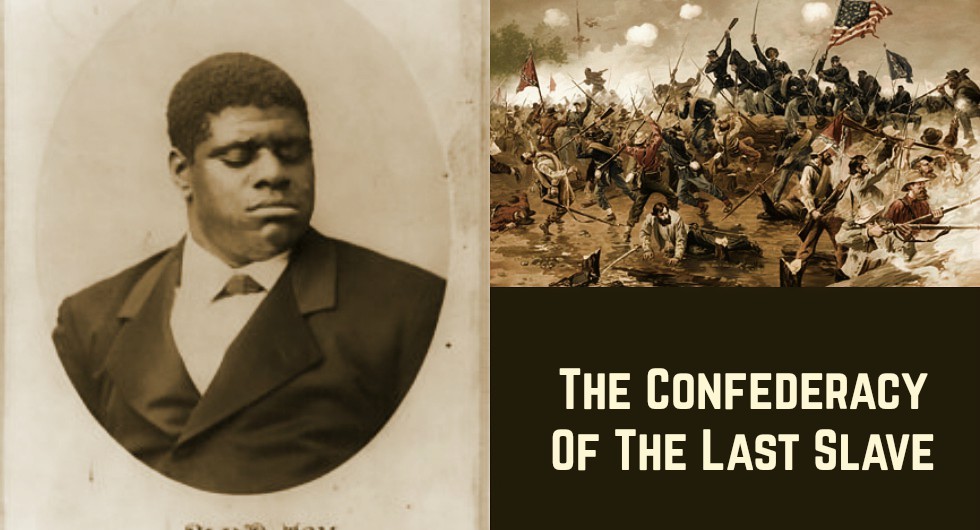
cover Battle of Manassas
Thomas ‘Blind Tom’ Wiggins
and 1st Battle of Bull Run
“Both parties deprecated war; but one of them would make war rather than let the nation survive; and the other would accept war rather than let it perish. And the war came.” – 16th US President Abraham Lincoln, American Civil War
∞∞∞
 July 1861, Manassas Virginia
Everything caught them off guard. From the cunning strategy of General Beauregard, to the fortitude of the Confederate army; from the induction of psychological warfare – known later as the Rebel Yell. From length and intensity of the American Civil War’s first major land battle, and ultimately to the realization, that the stampede of Union troops headed in their direction, were not galloping in jubilant celebration, but running in a chaotic retreat.
Hundreds of civilians had been picnicking in the distance, anticipating a swift and victorious ending. The reality of war crashed down like thunder, as they turned and fled with their soldiers. While the 1st Battle of Bull Run was a clear win for the Confederacy – with thousands dead, wounded and missing, the Battle of Manassas – the bloodiest combat in the Republic’s 85 year history – proved too costly to stand as a war victory, so Blind Tom offered victory in song.
∞∞∞
“In an age before recorded sound, Blind Tom’s Battle of Manassas was perhaps the only reference point whereby soldiers, citizens and slaves could make sense of the aural assault.” Author Deirdre O’Connell, The Ballad of Blind Tom
Battle of Manassas
composed by Thomas ‘Blind Tom’ Wiggins
courtesy of Tiesha Dynell Wiggins
∞∞∞
Born blind and into slavery, Thomas ‘Blind Tom’ Wiggins, also suffered from a severe mental health disorder (believed to be autistic savant), that allowed only limited awareness to self: a passionate appetite and a musical ability, that had never been seen. At age 5, he composed The Rain Storm. By the age of 8, he was performing live on a sold out national circuit. And by age 11, he became the first Black American to give a command performance by invitation of the White House. But it was 1861, and the sounds of war, that gave rise to Battle of Manassas, a masterpiece of its time.
“Tom’s impressionistic musical description of the battle pits the harmony of the right hand against the discord of the left. An insistent bass conjures the trudge of marching columns, tonal clusters evoke the roar of cannon and musketry. A brooding soundscape then ducks, weaves and punches its way into a medley of popular and patriotic songs – Yankee Doodle, Dixie, The Star Spangled Banner and Le Marseillaise – discord tugging at the heels of the melody until it finally implodes into the chaos of a harem-scarem finale.” – The Ballad of Blind Tom
∞∞∞

Pianist “Blind Tom” Thomas Wiggins and his owner General Bethune (1884)
Blind Tom died as a free man in 1908, but remained under the care of the former wife of General Bethune. In a career filled with music, Thomas Wiggins became the highest paid pianist of the 19th Century, making a fortune for the Bethunes, who became financial supporters of the Confederate army. And so, the Confederacy of the last slave would see a man pay for his own loss of freedom, exposing an ideology, that had to be defeated.
written & edited by Kendall F. Person
The Ballad of Blind Tom, The Ballad of Manassas
History Channel, First Battle of Bull Run
Wikipedia, First Battle of Bull Run Blind Tom Wiggins
THE LOVINGS: ALL THAT MATTERED


True love is like ghosts,
which everyone talks
about but few have seen.
– François de la Rochefoucauld
∞∞∞
from Vancouver British Columbia
Renan Javier with Pillars
∞∞∞
All that Mattered
written & edited by Kendall F. Person
It didn’t matter
whose gaze more badder.
All that mattered
was that they found each other,
while walking across the street.
It didn’t matter whose bell rung louder
or whose heart went pitter patter.
All that mattered was the chitter chatter
of the moon and the stars that be.
Love at first sight, oh it just might be
the one they had been searching for.
It was a fools thought that said it couldn’t be
but why should we limit our passion
when much of the world is ugly and not free.
It didn’t matter where they tied the knot,
only that they agreed
for the minister had asked them both,
“Will you – accept thee?”
It didn’t matter
the place, the first time they made love
only that they both cried out
and shuttered at each other’s touch
and undying love.
They were the Lovings,
living as husband and wife,
through joy and strife
and happiness as only the pure can be.
It didn’t matter
where they came from,
only each had found the other
now living their lives as one.
It didn’t matter,
the timing of pitter patter,
of tiny feet and hungry mouths to feed.
The Lovings gave birth,
to a son, the bloodline and first
of the next generation
of good people and good seeds.
Their lives were in sync,
the circle now complete
“Oh thank you,
Lord for this union you gave
we shall walk in your house forever,
and give back all that you gave.”
But the devil had bigger plans,
hell bent on destroying the master’s stand.
And sometime during the night,
he dropped by the loving sight
leaving anguish and fright with thee.
It didn’t matter whose heart broke harder
or whose tears fell faster.
The morning they awoke
and discovered their first child
bloated and choked,
and dying at the young age of three.
The Lovings fell down, creating residue
of a love that drowned.
It didn’t matter who held who,
only that they were together,
feeling the pain
of a color turned blue.
It didn’t matter who stood first,
the other followed
determined to continue living
and uphold
the child of birth.
The morning came, and the sun gained fame.
The Lovings opened their eyes, and
gave way to the new day,
determined not to cry.
They prepared for the day ahead,
trying not to think of the previous day’s dread.
But the agony would not go away,
and they cursed their God for taking
their only child away.
It didn’t matter who repented faster,
only that they did,
saving their souls which longed to be free.
They aged faster than their years,
losing their precious will to live.
Not wanting to suffer,
unable to breathe.
The Lovings had reached wits end
a place no human would ever wish to be.
They tried to go on,
making every attempt.
But could not find happiness,
being able only to vent.
And on a cold winter day,
The Lovings stood upon the cliff
enjoying the crashing waves.
Their lives had come full circle,
and this they both would know.
But now it had to end in the brutal and bitter cold.
It didn’t matter who died madder,
for both of their souls did leave.
All that mattered
was their love had shattered
across the rolling sea.
∞∞∞

Culture Clash: Beastie Boys, Eminem, Vanilla Ice and… a History of the White Rappers
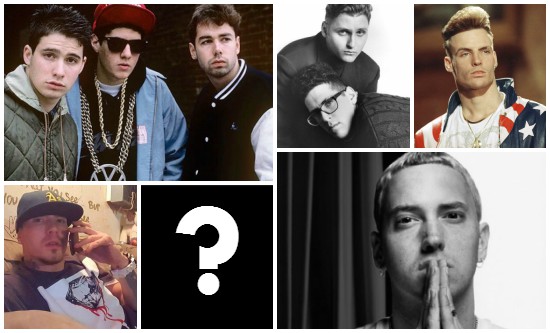
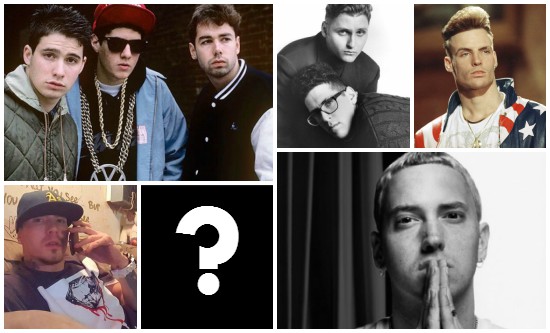
a music review
by Kendall F. Person
‘I went from rags to riches but
now I’m dipped in butter, ho.’
– Baby G Da General
In the late 1980s, when rap had securely established itself as a cultural icon in Black America, but just before it crossed over into a worldwide phenomenon, I attended a rap festival at The Coliseum in Oakland, California. It was the largest spectacle of rap music on one stage and the tickets would fly off the shelves. Run DMC headlined the bill, with a powerhouse supporting cast of LL Cool J, Whodini and the Timex Social Club. It was a spectacular showcase of music and one of the most memorable concerts I have ever attended.
While Run DMC held down the fort, with LL Cool J and Whodini delivering masterful performances, what I remember most is 18,000 African-American fans on their feet, grooving, swaying, trapped in the grasp of the backwards bassline of a song called ‘Paul Revere’, performed by a trio of young, white rappers, known as The Beastie Boys…who blew the roof off the coliseum.
∞∞∞
∞∞∞
Armed with the knowledge that many forms of American music were influenced by or outright stolen from Black musicians (Elvis Presley’s most famous song ‘ Hound Dog’ was originally recorded by Willie Mae “Big Mama” Thornton), young Black Americans were protective of rap and became even more empowered with the emergence of African conscious lyricists like X-Clan, Arrested Development and the legendary Public Enemy. Although, there was some bitterness about The Beastie Boys being credited as rap pioneers, since License to Ill would be there only rap album (and only half of the songs on that album where rap), there is no denying that their rap songs were authentic, and only a limited debate whether their emergence drew in white Americans, instantly quadrupling rap album sales.
Beastie Boys, 3rd Bass, Vanilla Ice, Keenan Rucker and Eminem
Over a decade would pass before the arrival of Eminem, who not only had a sound that rivaled or surpassed the best rappers in the industry, he also had to wash away the memories of a string of pretenders. 3rd Bass would be an instant radio hit, but their videos became increasingly cartoonish, bordering on buffoonery. And although MC Hammer’s descent had begun, when 3rd Bass unnecessarily insulted him on video (taken out of context or not), they had crossed the line and would fade, unceremoniously, from the spotlight’s glow.
But it was the rapping, dancing sensation, Vanilla Ice who would cause the most damage to aspiring white rappers. Concocting a story of being raised in a gang-infested Dallas neighborhood, when he was actually a spoiled, rich kid from the Miami suburbs, would be the final straw. No other white rapper would be accepted until the emergence of Slim Shady.
∞∞∞
∞∞∞
And then there are the many aspiring white rappers, who have been unable to convert their relative underground success, even into a one hit wonder on the main stage. From Michael DeLeon to Spencer Goldsmith, from Baby G Da General to The Neighborhood favorite Keenan Rucker.
a music review brought you by The Neighborhood
bonus track Without You
by Keenan Rucker aka ke3no
The 10 Movies that Define Our Altruistic Self
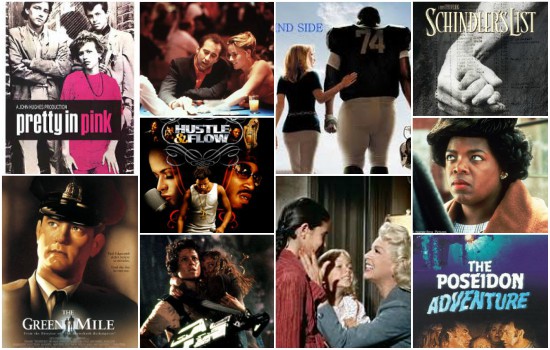
Every man must decide whether he
will walk in the light of creative altruism
or in the darkness of destructive selfishness.
– Reverend Doctor Martin Luther King Jr.
The sun fell with grace upon the land and
the hatred between men would scream
its last breath, defeated by the voices of reason.
– Kendall F. Person, Heroes
With so much chaos within our government, driven by what appears to be a complete sense of self-centeredness, and with so many motion pictures defined by explicit violence or technological advances, let us pay homage to the cinematic wonders whose unselfishness touches the heart and ignites our altruistic souls.
A republishing of…..
The 10 Movies that Define Our Altruistic Self
written & reviewed by Kendall F. Person
10 Pretty in Pink
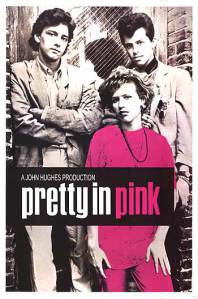 Sure this movie belonged to Molly Ringwald, playing the relatively complex, coming-of-age role of Andie Walsh, a high school senior looking for love and identify, while filling the void at home, created by the abandonment of her mother. It is a fact, that James Spader loomed large as the ‘misery-loves-company’ villain, using his money for love and prestige, although, he was little more than a ‘john’ of life. It was predicted, the cowardly Blaine would get the girl in the end, why else cast Andrew McCarthy in the one dimensional role. However, it was then little known actor Jon Cryer – now a baller in Two and A Half Men – playing the role of Duckie, a high school outsider if there ever was one, whose unselfish act of humility, realism (“I came by myself”) and the belief in old-fashion romance, that brought the movie full circle. With OMD’s If You Leave playing in the background, he not only saved the day by escorting a brokenhearted Andie into the prom, but had the decency to let her go once inside.
∞∞∞
9 Hustle & Flow
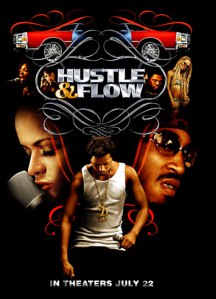 If not for the history making, Academy Award win for Best Original Song, It’s Hard Out Here for a Pimp by Three 6 Mafia, this brilliantly acted and directed film about a southern hustler, determined to build a legitimate life and business, using the only tools at hand – pimping and pandering – may have completely flown under the radar. With so many characters that both gripped us and disgusted us, it was the shy, little country girl that most enveloped what the movie was really about. Nola (beautifully underplayed by Taryn Manning), reminded us through the prostitution, drug dealing, narcissism and murder, Hustle & Flow was simply about capturing the American Dream. No disrespect to Shug (a breakout performance from Taraji P. Henson), whose unyielding support of Djay (a role Terrence Howard embodied with the soul of a 1000 struggling men), infused him with the fire to go forth; but as his woman, her support was as much about her future as it was his. It was Nola who summed up every ounce of courage and dedication in her used-and-abused body, filled it with an ambition akin to dynamite, and bet it all on someone else’s dream….who was serving eleven years in prison at the time.
∞∞∞
8 The Poseidon Adventure (the 1972 original)
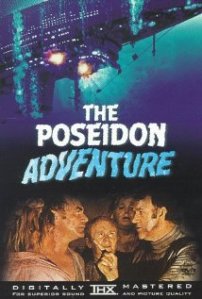 As audiences watched the poetic scene of Oscar nominated Shelly Winters, portraying the plus-size Bell Rosen, swim through the water, we took it for granted that death would not take her. But when it did, it blew our minds. But not only was she swimming to save herself, it was her unhealthy lifestyle which caused her heart to explode when it did. While it was that moment, that brought tears to audiences’ eyes, it was the actions of Revered Scott (Gene Hackman), that epitomized altruism. It’s easy to discard him as a corrupt minister, simply trying to save his own soul, however, when he grabbed hold of the scorching-hot wheel of steam, his actions assured there would be survivors – without any assurances – his soul was not destined for hell.
∞∞∞
7 The Green Mile
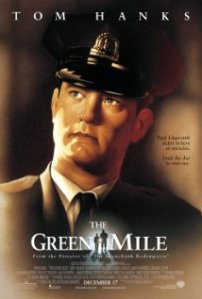 Stephen King, a prolific author and master storyteller, held a common theme in his myriad of books: a big finish. However, in The Green Mile, he quietly and so effectively, flipped the script on millions of loyal followers. The novel transferred, without incident, to the big screen, and as audiences watched, they readied for all hell to break loose – it never did. Instead, King utilized a giant, imposing figure, John Coffey, played with such purpose and grace by the late Michael Clarke Duncan, to weave a nearly spiritual ending from a tale of bitter hate. “I couldn’t help it, boss. I tried to take it back, but it was too late.” It was with those angelic words, audiences understood, that John Coffey lived only to relieve the world of pain – of which – he then must endure.
∞∞∞
6 The Color Purple and Native Son
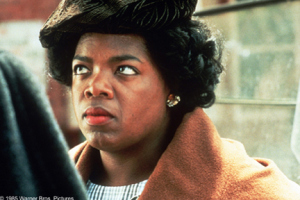 At first glance, the roles played by Oprah Winfrey in these two films, appear as mirror images. Poor, African-American women, raising families during Americas’ dark and shameful Jim Crow era, where tragedy, for so many, was imminent. But in ideology, they were polar opposites. Sofia, in The Color Purple, was a lioness. Mrs. Thomas, from Native Son, was a lamb. Had they lived in the same generation, Sofia would have followed the teachings of Malcolm X, whereas Mrs. Thomas, would have stood with Dr. King. But where the characters do meet, was within their over-my-dead-body willingness to give their lives for their children. Mrs. Thomas abandoned every last shred of dignity, as she dropped to her knees and begged ‘the man’ for her sons’ life. Sofia, in true to form, balled up her fist and literally fought to hang on to hers. One rotted in prison, the other languished inside the empty vesicle of her mind. But, there is no doubt, that these two very different women, would have unquestionably, given their lives to save their young.
∞∞∞
5 Aliens
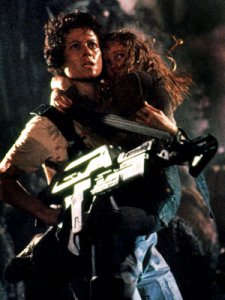 In the argument of nurture verses nature, Aliens gives the nurture argument a convincing win if not an outright knock out blow. Not only, was Newt (Carrie Hen) a new acquaintance, and of absolutely no relation to Ripley (a groundbreaking performance by Sigourney Weaver), but – through no fault of her own – the little girl was not all that likeable. But did any of that stop Ripley from forging straight into the Alien’s den, rescuing the kid, and killing all of the queen’s eggs in the process? A resounding NO! When the rescue ship finally arrived, audiences all but headed for the exits, relieved that this heart-stomping thrill ride was over. But those who did leave, missed the battle royale. And again, it was Ripley saving a child she barely knew. “Leave her alone, you bitch!”
∞∞∞
4 The Blind Side
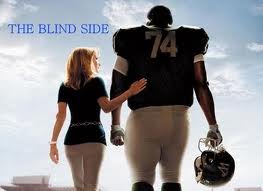 Sandra Bullock’s portrayal of Leigh Anne Tuohy, an upper class, tough as nails, southern Republican. Lee Anne saw each person as a human being. The tough guys were not tougher because they were poor and black, and the upper crust wasn’t inherently good because they were rich and white. She measured each person by their own merits and issued no judgments, even when she could have been forgiven for doing so. Her anticipated meeting with Michael Oher’s mother (hauntingly played by Andriane Lenox) was so respectful, so Christlike – let he who is without sin cast the first stone – no words were needed for audiences to understand, at the moment, we knew, he was a child of them both.
∞∞∞
3 Leaving Las Vegas
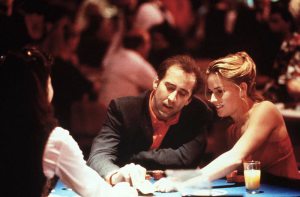 Even this movie, one that scrapes life’s bottom barrel, demonstrated to audiences, that regardless of our socio-economic or emotional standing in the hierarchy of society, – as human beings – we always have something left inside. Elizabeth Shue was astounding in her sympathetic portrayal of Sera, a lonely, street hooker that the good life forgot. She falls in love with Ben Sanderson, a suicidal alcoholic who moves to Las Vegas to die (Nicolas Cage in an Academy Award winning performance). These two empty souls, somehow, found each other and a reason to laugh again; to love again. But Ben was not simply suicidal, he was in the act of committing suicide the entire movie. Even after Ben makes it painfully clear of his intentions, Sera – perhaps the ultimate altruistic chick – remains with him, stays beside him and even makes love to him, till the heart-crushing, soul-searching bitter end.
∞∞∞
2 Imitation of Life (the 1959 remake)
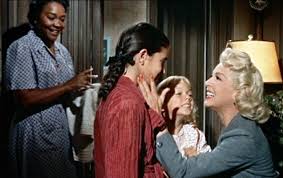 If Altruism were to be an official classification as a movie genre, Juanita Moore as Annie Johnson, in the powerful Imitation of Life, would be the standard-bearer. Being a parent to a troubled child, tests the limits of love and devotion. But being the parent of Sarah Jane, Annie’s emotionally wrecked, self-centered and disrespectful daughter, pushes those limits to the breaking point. Yet, Annie would never stop loving her daughter, never stop trying to give Sarah Jane the best life she could. Nor would she ever allow, her strict moral compass to succumb, even when Sarah Jane’s vicious rhetoric, felt as if she had spat in the face of Motherhood, itself. Annie’s love would not diminished…one…single…iota.
∞∞∞
1 Schindler’s List
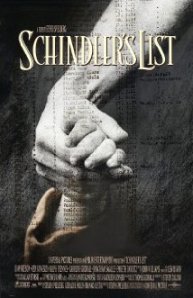 Liam Neeson’s brilliant performance as a German who devotes, not just his life, but his very existence to fighting evil and injustice, personifies the spirit of altruism. Certainly, during the many atrocities the human race has wrought, there lived an ‘Oskar Schindler’ in every one (Mother Teresa, Martin Luther King, Mahatma K. Gandhi, to name so very few). The notion should ring deep, that as a human being, Oskar Schindler, did all he could, and all that could have been expected. But alas, the expectations of man can only run so deep. His state of depleted emotions for not doing more, dives past the consciousness and jumps head first, into the spiritual soul we pray to keep.
– a movie review
Trending


Support The Neighborhood

You are appreciated. (big smile)
ABOUT ME

Kendall F. Person Answers Questions on Quora


 this is... The Neighborhood
You must be logged in to post a comment.