this is… The Neighborhood
the Story within the Story
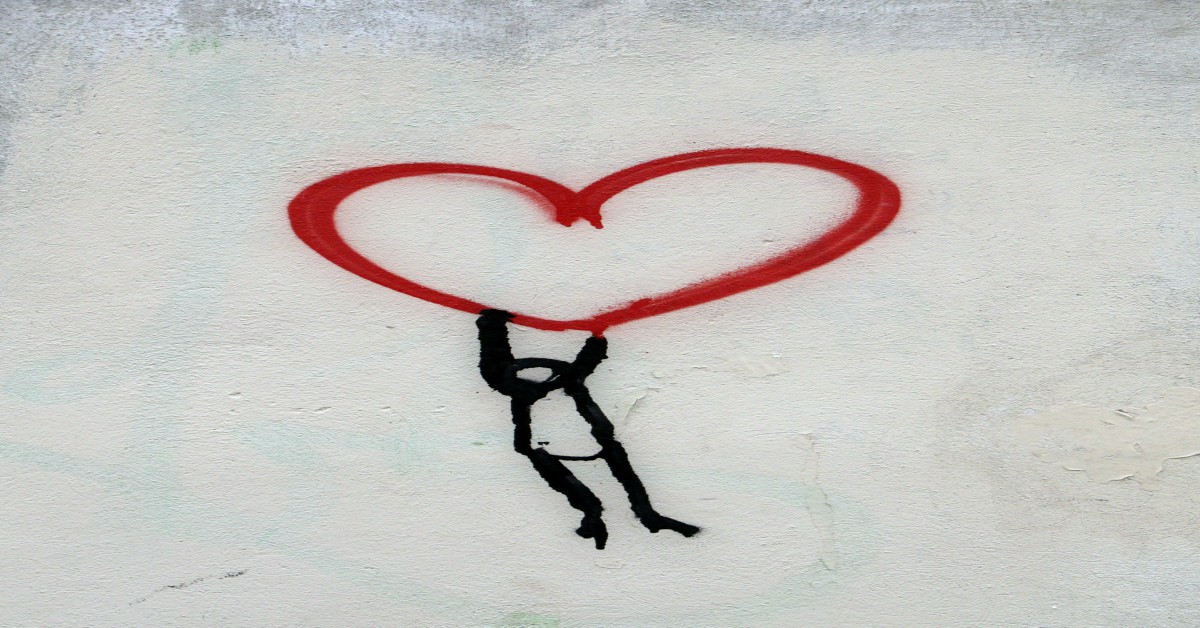
The Blogosphere, the Neighborhood
Building The Neighborhood into the destination of my vision, is not without challenges, but there is never a day,I am not humbled, proud and dedicated to following that vision through. The Blogosphere, the Neighborhood – from the blog Hike and Forage – has reminded me of why I started and why there is no turning back. You are appreciated.
Depiction of the Abused: an Artists Collaborative

{press play}
Don’t let the name fool you,
this is a very real and sad topic that should be brought into awareness.
I have only had to deal with this in a supporting role the past couple of years.
But, if I can help someone else, then that is what I will do.
– The Harsh Reality from the blog Workesforme

Why???? by Arindam
Processing my abuse is hard, it sucks; but you know what?
I still have good days. I can’t just write about my abuse.
I want to express every part of me, every pissed off, happy, or sad moment.
That is me, it is the real me, the “naked me” that I intended to start expressing here.

stop child abuse by xioxio
So although my abuse is what led me to write here,
I will not just write about my “recovery.”
I am going to write about what I feel at the time
because my past has shaped me into the person I am now.

Innocence by Paperdragon
I refuse to wear a mask
and tell anyone who has suffered any kind of abuse
that “there is life after” and “you can survive”
you can get that anywhere really.
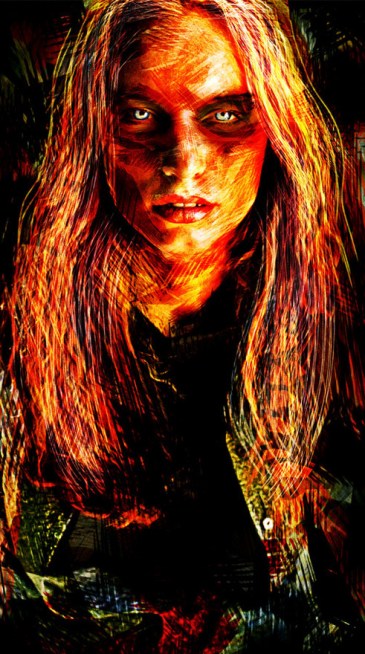
Empty Shell of Love by nighthawk101
What you are going to get here is the unmasked me,
and the journey that my life is in that very moment.
– Naked Me: Revised from the blog This is Naked Me

‘My Heart’ first song produced entirely in The Neighborhood


The Neighborhood – an original online, art house collaborative of visual, recording, performance & written-word artists is proud to present our first original song. Developed, written, performed and recorded in just 5 days, by four people whom have never met face to face.
My Heart
performed by IvySoul Robinson, Philadelphia
produced by Keith Montgomery, Baltimorere
recorded at P-Shaw Productions, Philadelphia
video directed by Fran Daddy, Philadelphia
written by Kendall F. Person, Sacramento,
Ladies & Gentlemen….. the World Premiere of
Lyrics
Long ago – in a distant time – of the same world we were gifted – gifted life,- and a mother earth free will – to design – a heart to spread the word One day – we believed – Man was king and we would walk away – turn our back on- the Supreme And my heart – would never ever beat the same again
chorus we are the children -of a king He gave us – everything – we’d ever need All He asked -is that we live – live in peace But my heart – it is broken – we the children – have the chance to sing
We the people – of every nation – would start to think life is – not over – and we control – our destiny Close your eyes – and imagine – the paradise of sharing love – of each other – right… here….. on…. earth
chorus we are the children -of a king He gave us – everything – we’d ever need All He asked -is that we live – live in peace But my heart – it is broken – we the children – have the chance to sing
We must – believe that – a better life – starts inside – the individual us And every man – and every woman – and every boy and girl has a purpose – filled with beauty and love we must learn – the human nature of us -we win this together- as one
chorus we are the children -of a king He gave us – everything – we’d ever need All He asked -is that we live – live in peace But my heart – it is broken
repeat chorus we are the children -of a king He gave us – everything – we’d ever need All He asked -is that we live – live in peace But my heart – it is broken – we the children – have the chance to sing
THE WHITE BUTTERFLY
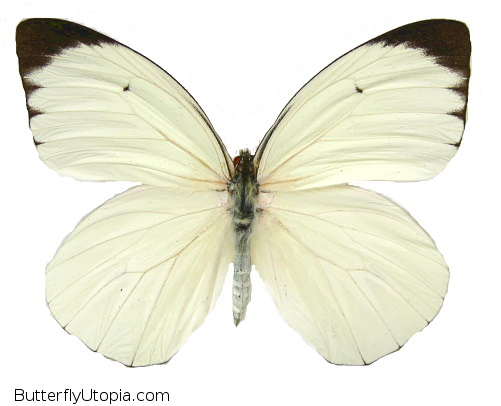
Sometimes beauty is found in a painted picture, that only the artists comprehends. Sometimes power is felt in a dance, that only the performers understand. And sometimes there is a magnificence in words, that only the writer can translate. Perhaps, that is the beauty of art, allowing each of us to reach our own conclusion. From Toronto, Canada a young writer presents The White Butterfly. The beauty in his words, lies in the mystery of their intent.

Originally written September 1, at 3 p.m.
******
Tranquil. That’s how I’d describe the moment. But not a good type of tranquility: it isn’t the kind that simply drowns out the background noise and let’s you get lost in your own thoughts; it’s not the kind that soothes every nerve to the point of ecstasy. This tranquility is almost superficial. It is what is imposed on you by the elements – by circumstance.
It is the dead calm of the day. It is the single and distant bird whistle or squawk. It is the all-too-audible humming of some machine. It is the lonesome white butterfly making its way through the wind, seemingly lost. The sky torments me: the dead, grey lump above me that threatens me with a deluge, but dares not move a muscle. It doesn’t even breathe hard, for the trees don’t dance. A few shake their…
View original post 306 more words
Trending


Support The Neighborhood

You are appreciated. (big smile)
ABOUT ME

Kendall F. Person Answers Questions on Quora


 this is... The Neighborhood
Nonprofits the invisible hands
Posted on by Kendall Fredrick Person
57 Comments
I have found that among its other benefits
giving liberates the soul of the giver.
– Maya Angelou
Sometimes dreams do come true. When we are children, we dream all the time. Dreams of Santa Claus coming down the chimney with a bag of toys and ushering in good cheer. We dream of Disneyland and riding the fastest roller coaster, arms held high, screaming in delight. We have nightmares too, but those do not last, because we know our parents will protect us from the ghosts and goblins and all of those monsters hiding underneath our beds. We close our eyes and return to paradise. Dreams of sugar plum fairies and soaring with the wind. We dream of all good things, because when we are children we believe that all things are good.
As adults, dreams do not go away. They become based on reality, however, no longer the Easter Bunny, but about the homeless family we passed on the way to work, that someday, they will have a place to sleep. We dream of cures to cancer and hiv. We dream of our soldiers coming home and their bodies and minds still in one piece. We have nightmares, just like our kids, but they are no longer monsters of our imaginations, but the ills that rule the day. There are now two homeless families, one more than the day before. And as we sink deeper into our sleep, before our eyes, the homeless population has multiplied and only the sadness in their eyes awakes us from our nightmares. We are sweating and we are chilled, but we are at home in our beds and thankful those families are not us. We say to ourselves, before we go back to sleep, Tomorrow, we will make a difference. We will lend a hand where needed, we will break bread and feed them, we will write our soldiers and wish them well, we will become a part of the solution, no longer complaining or worse yet, disappearing into our own salvation, and pretending that we do not see them, or convince ourselves, that those in need of a hand, are there by their own fruition, and that we are just one person anyway and one person cannot make a difference. We then turn over and comfortably go back to sleep and our hands that are meant to reach out and help, become invisible once again.
The Neighborhood Proudly Presents Our Featured Presentation
Nonprofits the invisible hands
set design by Nafiys Walters, aka Fran Daddy Education Works, Philadelphia, USA &
The Leaf Society, Namakkal district of Tamilnadu, India
soundtrack Angel by Damian Baran, Slovak Republic &
My Heart by IvySoul, Philadelphia, USA
photo courtesy of The Leaf Society, Namakkal district of Tamilnadu, India
In 2009, in the United States, The Tea Party movement came into existence and quickly rose into power. Love them, hate them, support them, ridicule them, they were for real. Cutting through the divisive rhetoric and angry tone, their mission was simple, to reduce the role of government in the lives of American citizens. Their rise was so fast and so overwhelming, that those who opposed them, were forced to match their level of intensity, bypassing civil discussion and common ground, jumping head first into polarizing elections and distrust all around. And while there exist extremist on both sides, who will never compromise, remaining forever the monster under the bed, I imagine, that the majority of the people, rather we say it out loud or even feign indifference, realize that the answer to our challenges lies somewhere in the middle. A reachable reality, yet it remains stagnated in our dreams.
The nonprofit community, in reference to those of a societal, charitable nature (the National Football League is a $9.5 billion per year nonprofit, not included in this discussion) whose sole purpose of existence is to lend support to their respective communities, be it in health, education or support after the wrath of a natural disaster. They are made up of people from every walk of life and include paid staff, an army of volunteers and philanthropist whose financial giving is what helps the nonprofit community stay afloat.
But there is a third, and just as vital piece of the equation, barely mentioned but always in the picture, and that is us. Every time we give a dollar to a homeless person on the streets, each time we buy someone who is hungry something to eat, or help an elderly person across the street, or give a newly released prisoner a job or a chance, that is charitable giving, and we must comprehend, that it makes a difference to those in need of help. And it may be that small show of support, that turns a life around, who may then go on to contribute, becoming a productive member of society.
photo by Nafiys Walters, Philadelphia aka Fran Daddy
Philadelphia, with a population of more than 1.5 million, is the 5th largest city in the United States. Filled with historical places and some of the most talented and inspirational people in the nation, grapples with its moniker as the City of Brotherly Love due to a soaring crime rate and a poverty level, nearly unrivaled throughout the nation, Executive Director, Bill Hart of Philadelphia RISE (The Mayor’s Office of Reintegration Services) is passionate when he states, “if Philadelphia is to return to world class status, then we must address our weakest link.” There was no condensation in his words or voice, simply addressing real challenges that exist in a city where 200,000 residents have a criminal history. RISE works with newly released inmates and the corporate community to give them a fighting chance by finding jobs, allowing them to maintain their self-respect and escape a life of crime. Although the program has the full support of the Mayor, Hart recognizes, that the city alone can not solve the challenges by itself.
Enter the nonprofits. The Pennsylvania Prison Society, understands the importance and value of maintaining family contact, so their contribution is providing transportation to the family members of the incarcerated, making reentry less of a family issue. But the real jewel is found in South Philadelphia. Don’t Shoot, headed by the dedicated Executive Director Ella Best is a community nonprofit of volunteers, that engages children as young as five years old in educational and athletic activities, believing that preventive measures offer the keys to a brighter future for her city and community. Don’t Shoot has served nearly 600 kids and Ella Best states, that they have not lost one to pregnancy or the juvenile court system. When asked how could her organization make an even bigger difference, she replied “Obtaining a facility so that we can serve more kids.”
photo courtesy of The Leaf Society, Namakkal district of Tamilnadu, India
When K. Sai Prathyusha arrived in the small village located in Namakkal district of Tamilnadu, India to intern for The Leaf Society, not only were there no toilets of any kind, the villagers were defecating in the open. Prone to all sorts of diseases, isolated, uneducated and living hand to mouth, there was little hope for the Periyaveppanatham Village community of living a better life. Overwhelmed, but not to be defeated, The Leaf Society reached out to the Indian government to support them in their endeavors of helping the community build sanitary facilities. But The Leaf Society did not stop there. Similar to Don’t Shoot, they realized if the community were to be given a future, that they would need to expand their program and began educating the children and protecting them from the abuse of child labor. The local government established a grant to assist in funding the nonprofit organization, realizing they must do their part if the village children were going to have a better life. When I asked K. Sai Prathyusha what was at the top of The Leaf Society’s wish list, she stated simply “Visibility.”
photography by Nafiys Walters aka Fran Daddy, Philadelphia
In reality, as committed as any government agency or dedicated as a nonprofit organization, without the committed volunteers, donors, supporters and community members, even the best designed plan will have little chance of success. So whichever side of the aisle we line up on, the halfs or the half nots, less government or more, able to give or in need, we all have something to offer. And if we ever want our nightmares to truly go away, we must not hide our hands of support, because they are visible either way.
– Kendall F. Person, thepublicblogger
Category: political, think Tags: all-inclusive forum, bill hart executive director, charitable giving, city of philadelphia, collaborative, commentary, don't shoot, editorial, fran daddy, government, india, invisible hands, Namakkal, neighborhood children, nonprofit community, nonprofit organization, online art house, Periyaveppanatham Village, philadelphia RISE, philanthropy, Tamilnadu, the leaf society, the neighborhood, think, we are our brothers keeper