this is… The Neighborhood
the Story within the Story
LAW OF THE LAND: THE RECORDING OF HISTORY SEGMENT II

The Recording of History Segment One

At his best, man is the noblest of all animals;
seperated from law and justice he is the worst.
– Aristotle
∞∞∞
from Philadelphia, Moka Soul
with Unchain My Soul
∞∞∞
LAW OF THE LAND
The Recording of History segment Two
written & edited by Kendall F. Person
The Village
In 2000, 14-year-old Kenneth Young of Tampa Florida would shed what little of a childhood he had left, and in the eyes of the law and in less than one year, he would transform from a little boy into a world class felon. At the age of 11, he and his only sister did the best they could, I imagine, to fend for themselves. Father, never mentioned and his drug addicted mother was always nearby, but in order to see her, he would have to ride his bike to the crack house, and beg her to come out. His sister, only four years older, did the best she could, but at 15, she had become a mother herself.
When a 24-year old hustler, tired of the petty dollars from his small time clientele, devised an ill-conceived plan to get rich overnight, he needed an accomplice and Kenneth Young, a little boy with no guidance, was prime for the picking. So the grown man and the little boy would begin a journey to throw away their lives, by pulling out guns and robbing everyone in site, each successive victim, victimized with more hate and control then the one before. But somewhere inside, the innocence of a child clung to life. When the grown man held one victim – gun jammed into her head – and threatened to rape her, Kenneth Young realized, he was way in over his head, “Please don’t do that man. Let’s go.” where the words he said. Soon after, the two would be apprehended, their crime spree, brought down by the long arm of justice. Just in time some have said, for no one had been murdered or severely injured in anyway.
Community & Justice
In 1994, Robert Yummy Sandifer of Chicago Illinois would literally shock the world, when the 11-year-old murderer, was murdered himself before his twelfth birthday. We knew Robert was violent, but we learned through reports, news coverage and records, that he never stood a chance. And so we made a vow, that we would love our kids and do what needed to be done. But 6 years after Robert’s shocking death, we failed on that promise – once again.
Kenneth Young would be convicted for armed robbery, and even at his young age, he knew there was a debt he had to pay. But at 14 years old, it would be years before he would fully comprehend the meaning of the judges’ words. But most disheartening was that the history learned had been either ignored or forgotten. The sentence was handed down, delivered by sanctimonious force, as if the juvenile delinquent, was not the story of us. And in what could only be explained as a deliberate display of power, 14-year-old Kenneth Young would receive four consecutive life terms, as if to shake our fist at God in saying, “Even after your child has rotted, then died in jail, you cannot take him home, for he has three more life sentences to serve man.”
Laws
There are four basic laws – no slight to the others – that exist throughout mankind – one has no effect on how history is recorded. The Law of Physics cannot be argued or debated or ignored by anyone. And even when we try, gravity could care less. The Law of God may usurp all in the eyes of many, but is actually the most lenient of the quad: it offers free will to do as we want. The Law of the Land is structured to be fair in maintaining a civil society, to keep man in check and from running amok. And any inequalities that linger and remain damaging to the community it serves, are through no fault of its own, because the law of the land is written and interpreted by the law of man.
∞∞∞
Peace by Moka Soul
∞∞∞
The Law of the Land Revised
Eleven years later and after exhausting all appeals, the United States Supreme Court stepped in to right the wrong and assure history would be recorded a different way. With the exception of cold blooded murder, they decided it just was not right, and stripped the states of their ability to put our children in prison for life. Kenneth Young’s sentence was reduced from 288 years from the crime spree that rocked a community down to 30, more indicative of a punishment fitting the crime.
All but one of the victims that testified at Kenneth’s hearing, recounted the emotional pain of the day their lives crossed paths, and after playing back the historical tapes embedded in their minds, each urged the courts to not let Kenneth out. But one was not aware of the age of the defendant at the time, nor the story of his life. But with the new information, she did something quite extraordinary; while rolling the mental tapes, she inserted the information she had about him now, and it triggered new emotions and new thoughts. That the little boy was not the monster recorded in her mind, and he in fact had saved her “Please don’t do that man. Let’s go.” and she thanked him in kind. By having the courage and the wisdom to record her history with all the facts she now held, allowed her to move forward from the pain of the day, eleven years hence; and to understand, the problems that led up to their one and only encounter, were not created by him alone, but were born from the depth of society.
Society & Humanity
It is imperative, even more so than human compassion, that we think big in connecting the dots accordingly. History was well documented and recorded properly in the catastrophe known as Robert Yummy Sandifer’s life. Delivered on the proverbial silver platter a chance to create a template, to locate solutions, to prevent a repeat of a collective failure, but we did not act. The importance of understanding how history is recorded, the role each of us plays and noting its effects on future generations, cannot be overstated, but by itself, it is a tool that serves no purpose, if we as individuals, communities and states are not willing or prepared to put the law of man into its proper place.
- an editorial of thepublicblogger
Make your first ever donation.
Amount is irrelevant. But
your demonstration is not.


THE RECORDING OF HISTORY
∞∞∞
THE RECORDING OF HISTORY
SEGMENT ONE
written & edited by Kendall F. Person
History’s Ghost
I have driven across the United States of America – my country – eight times; from Blaine Washington to Providence Rhode Island. From Key West Florida to San Ysidro California. From Austin Texas to St. Paul Minnesota and all points in between. And while I experienced a flurry of emotions as I drove through or spent time in 42 of the 50 states and the District of Columbia, including wonder and fatigue, but only once did my travels, along the open road, invoke ghosts and pondering of history; and that was while driving through the bayous of Louisiana on a pitch perfect day.
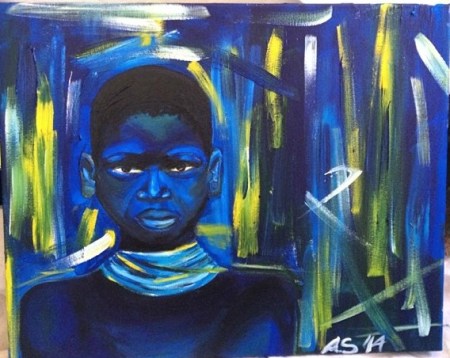
Troubled Boy by Aliyah Sidqe
“Run, Joshua, run!” I could hear my mother scream. “And when they catch you, run away again.” I was born into slavery, a free man I had never been and would never be. I had no idea where I was running to, or what life awaited me once I was there, but my mother had passed down stories told to her, about what it meant to be free. It was the history of my family that kept me running away, determined to find this freedom and deliver my people to it, for in servitude and bondage was no way for a man to be. It was the history of our bloodline that kept us strong. The knowledge, that we were descendants of a tribe of people, a community, gave my family hope and strength and dreams, and no matter how hard they tried to beat it or brainwash it out of us, the recording of history in our minds, was something that could not be stripped away.
A Fight for History
The late 1980’s and early 1990’s was a boom and bust time for young African American males. College enrollment was on the rise, positive, progressive shows (The Cosby Show, A Different World) topped the Nielsen ratings. Black directors led by Spike Lee, were making their Hollywood mark and the hip hop industry was not only proving itself to be a force in the recording arts industry, but learning from the past, many young black entertainers held onto control of their own destinies. But the crack epidemic and gang violence threatened to derail positive self-images, and while many theories existed as to how the destructive drug had arrived in the inner city, and with lingering dust of racial inequalities still a part of the fabric of our nation, ultimately, it was a problem that had to be solved by the community itself.
On October 16, 1995, more than a million African American men, young and old, rich and poor, educated and dropouts, clergy and convicts would converge on the nation’s capitol in a powerful yet humble display of togetherness, of uncertainty, of trying to find the answers to who we were and where we stood in the only country we have ever called home. There was no blame on that day. No angry shouts about the oppressor, no fists raised defiantly in the air, only direction and love and sharing of wisdom, and the message that it was time we stood up for ourselves in creating communities in which we would be proud to raise our families. It was a very reflective moment, not just for the black community, but for the nation as a whole. But what should have evolved into a continual discussion on what we learned and what needed to be done, was sabotaged, not necessarily on purpose, nor by any one group or person in particular, although we have no real way of knowing, but the damage had been done, nonetheless.
The National Park Service, the official historian of the day, would record the number of 400,000 in attendance, far below the 2 million estimated by the Nation of Islam, setting off a firestorm of controversy, and becoming the main topic, forever recording history as a battle of numbers.
History Lesson
How will history be recorded about the present day clashes between the police and private citizens and the deaths of so many unarmed, young black men? Will the course begin with Trayvon Martin and end (we hope) with Keith Childress*, discussed in university lecture halls, concerning the state of the nation? And will this give rise to think tanks being created to alleviate the poisons, that must still persist in the minds of many about our fellow citizens? Or will each individual death and resulting protest, trial or riot be listed as a single occurrence, each life lost and community torn apart, forgotten with no lessons taught and nothing learned?
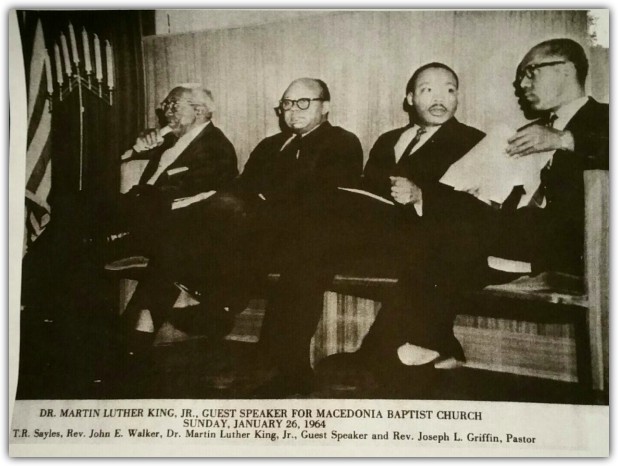
When the above photo of my Grandfather sitting next to a man that changed the nation was discovered, it was a historic day for my generation of siblings and cousins, as it served to enhance the knowing that we belonged to a proud bloodline, that was a part of the solution, therefore, we knew, a leader must be inside of us too, although the decision was ours to make.
It was the recording of history, through secret languages, family bonds, and whispering talks when the slave owners were not around, that helped support entire generations of a people in bondage, an institution that lasted for well over 200 years, delivering the fortitude needed to never give up and the reckless dignity required to race for daylight every chance they got, even with the knowing, savage beatings and death awaited upon being caught.
If the numbers by the Nation of Islam or even the more conservative figures touted by Boston University’s Center of Remote Censoring had held, the Million Man March would have been recorded as the largest march or demonstration in the history of our nation’s capitol, giving it a historical significance that could not have been ignored by historians when writing their books and by the governing boards of education, when determining what and how history should be taught.
History’s Future
If the continued dialogue had been one of self-love, responsibility, community and brotherly love, rather than the forgettable controversy of numbers, would that have changed how some still view African American males or how some of us still view ourselves – through a less than favorable, judgmental lens? Could it have continued to increase the enrollment in colleges, and would it have led to the vibrancy of many inner city communities, and would it have said to later generations, that Black life matters, making it more difficult to pull the trigger, and would tragedies like Baltimore and Ferguson, and Trayvon never happened, and with so many pressing problems that affect us, like drought and climate change and food shortage, two decades after the Million Man March, would the racial divide have finally, no longer been our problem?
If history had been recorded a different way, how could it have not.
an editorial of thepublicblogger
The Law of the Land: The Recording of History Segment Two
a recorder of history: The Illstorian
*Final Tally, The Washington Post
‘My Friend the Wind’ from the Classic Poets Corner

My Friend the Wind
written by Andrea L. Harris
The wind sat on my lap today
And told me what he’d heard.
When asked where he obtained his knowledge,
He replied, “Oh, a little bird.”
He said that he has seen it all
While drifting through the sky.
He’s seen some live and laugh and love,
And he’s seen some die.
“Now Wind,” I uttered a humble bliss,
“Why are you perched on me?”
The wind replied, “I’ve come as a friend
To show you what I see.
“I’ll tell you Miss, with tears in your eyes,
Why must you feel so sad?
Just come with me, I’ll set you free,
You’ll see all the riches you’ve had.”
“But I’ve had no riches,” said I to the wind,
“My life is filled with sorrow.”
The wind replied, “Nay, my lad,
You’ll understand all tomorrow.”
So, off we drifted, soaring through the air,
I saw all just like the wind.
My eyes had suddenly seen the light,
For I’d seen the world from within.
I turned to him with great appraise
My life was now an array.
The tomorrow he’d preached had finally arrived
But the wind had drifted away.
But, as he drifted, I heard a soothing sound.
It was a faint whistle you see.
It was the wind announcing that,
“Whenever You hear the whistle, it’s Me.”
Now as I stumble through this cruel, cruel world,
I’ll often hear the wind.
And all my emptiness just drifts away.
For I realize, I still have a friend.
cover art San Francisco gifted to The Neighborhood by Robert M. Goldstein
THE DISSECTION OF BLAME

A man can fail many times,
but he isn’t a failure until he
begins to blame somebody else.
– John Burroughs Quotes
∞∞∞
Anna Kendrick w/ Cups
∞∞∞
THE DISSECTION OF BLAME
written & edited by Kendall F. Person
San Francisco 1978
Sometimes our legacies do not fully blossom until long after we are gone. We live quiet lives, far from the public eye, and even with an inner drive, that attracts hundreds, then thousands to stand beside us and follow us, our humility makes it difficult to understand it is a leader they see. Some of us come into our own at a very early age, knowing exactly where we want life to take us, becoming focused in reaching that stage. Many of us, grow into a self, that we may have never known was there. No difference in what age of life we discover our paths, our gifts, our happiness, as long as we grab hold of them, and understand that blame resolves nothing within.
Harvey Bernard Milk belonged to the latter group. He grew into his role as a leader and activist for change, absorbing three straight defeats in his bid for public office, but in 1976, he would finally win an election, making history in the process, as the first openly gay city commissioner in the United States. Even in San Francisco, one of the most liberal cities in the world, a fight for marriage equality was unthinkable, for at that time, it was a battle for acceptance. Still relatively unknown to the rest of the world, Harvey Milk’s determination, pride and victory made him a rock star in the City by the Bay.
On November 27, 1978, the blame game would materialize and start to take shape. Bitter and disgruntled by his perceived slights, former county supervisor Dan White, refused to accept responsibility for the sinking ship, that was his life. He had earlier resigned from public office, then at some point, had a change of heart. When the request to reclaim the job, he had abandoned, was denied, he would raise the stakes in a game, that only he knew he was playing, by blaming anyone but himself. He would walk into City Hall, a monument serving the people, gun down Mayor George Moscone, then took the life of Harvey Milk.
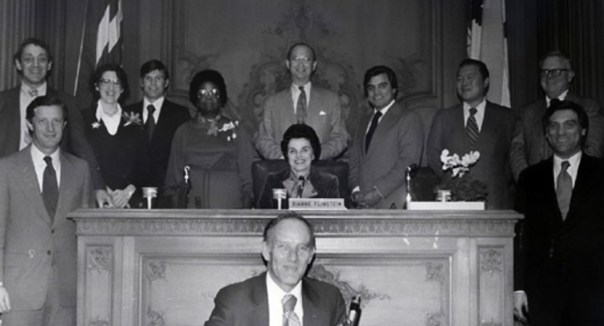
Impossible to deny he pulled the trigger, and with no other defense, Dan White’s attorney elevated the blame game, to a whole other level. Once a stalwart of nutrition and physical fitness, White’s professional decline, not only poisoned his marriage, but led to a change in diet. No longer eating healthy carrots, he began to consume only junk food. It is known as “the twinkie defense”, that a change in his eating habits, led to a diminished capacity, so his lawyer blamed the pastries, as the reason why he killed two men. Verdicts in high-profile cases have been stunning, but no one could have ever predicted this. A jury of his peers, accepted the theory of blame, finding him not guilty of first-degree murder, reducing two meaningful lives, to the lesser offense of voluntary manslaughter, for which he served only five years.
When our decisions and our choices, wreak havoc in our lives, we may tend to become more defensive, angry without knowing why. We are challenged in getting back on track, everything we do derails, and everything we try does fail. So we begin the dissection of blame, assigning each disappointment to a family member or friend. We blame our parents for something they did, ignoring the reality, it has been 40 years since then. We blame immigrants for taking our job, dismissing the notion, that we were caught sleeping, while guarding the store. Obsessed by blaming others, becoming a victim in our own mind, leads to a confusion so complete, we live in a belief, based on our own lies.
Stumbles, free-falls and mistakes happen, but most scars are not permanent, if we accept, we can learn from and avoid the same mistakes. Blame is not always malicious or done with intent, it protects our psyches, when they are frail, offering self-esteem when needed,rejecting the reality of its false existence. The importance of accepting responsibility for our choices that turned bad, cannot be understated. It is how we start to heal. How we learn to love ourselves, of which Dan White never would. He convinced the jury he was blameless, but he could not convince himself. And two years into his freedom….Dan White would kill himself.
this is…. The Neighborhood
Family
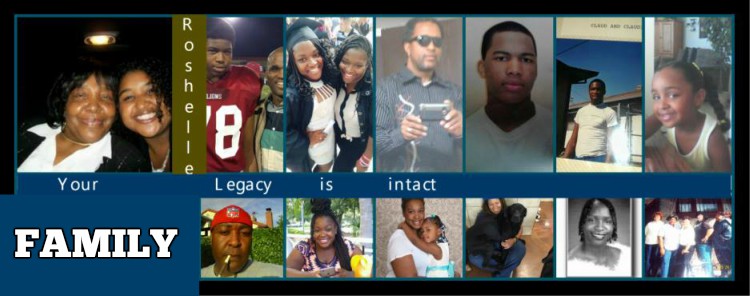
the ‘Family’ preamble: Acting From Love
*****


Curtis and Renee Mallory, Denver
Kendall F. Person: Hey, Cousin.
Renee Mallory: Hey.
Kendall F. Person: You gave the family quite a scare. With Edward and Tony now gone, you are the oldest of our generation. So glad you made it through and thank you, cousin for sharing your story. What happened?
Renee Mallory: On March 27, 2013 I was diagnosed with spindle cell cancer in the stomach and intestines. I had nine bleeding gist tumors. Surgery was not an option, I was hospitalized for a couple of weeks to get them under control,and a biopsy,to determine how bad it was. Well, I was told there wasn’t a cure and I only had 3 month to live,
Well, they found a drug that hadn’t been tested called GLEEVEC 400 MG. CHEMOTHERAPY everyday for two and half years. My tumors shrunk from golf balls to the size of jellybeans and then, surgery became an option. On January 28, 2015 I went through with it, and they removed all the cancer they could see.
I’m cancer free, but I am still on medication, my gleevec I’ll take it maybe for another two year or the rest of my life. Either way, I’m so grateful, thankful and blessed, I take nothing for granted, God has given me my life back, My family’s support played a major role in my recovery. My husband of 23 years is such an honest, loving man. Goes to church everyday. He’s my rock.
I’m planning on hosting a family reunion this year to bring all of our families together; distant cousin’s, auntie’s uncles, everyone. I’m excited to be able to do this. Besides if I don’t keep us together, who will?
Kendall F. Person: (chuckling) You better not let Aunt Frances hear you say that.
Renee Mallory: Thanks for letting me share my story.Families are everything.
Kendall F. Person: Love you, Cousin.
Renee Mallory: Love you too.
∞∞∞
from Denver Colorado
Tan Band feat. Renee Mallory
w/ Bad Decision
∞∞∞
Family
and introducing… the Everyday People
from Denver Colorado, Renee Mallory
from Indianapolis Indiana, Jamal Miller
from St. Louis Missouri, Kim Gosselin
∞∞∞

“There will be some who think this legislation goes too far and some who think it does not go far enough, but as governor I must always put the interest of our state first and ask myself every day, ‘What is best for Indiana?’ I believe resolving this controversy and making clear that every person feels welcome and respected in our state is best for Indiana.” – Mike Pence, Governor of Indiana, on the approved changes to the Indiana Religious Freedom Restoration Act*

Jamal Miller of Indiana
New is the word I use. My husband and I dated for nearly four years, and will celebrate our first marriage anniversary in May. Like other couples, we have life goals, and things we work together to accomplish – as a team. In passing, we talk about children, although I never imagined, what the family I would build would look like. I didn’t even know I would be gay until I was fourteen, and that minor detail, turned this game of life, into a whole other ballgame.
What I enjoy most about my relationship is that we are everyday average Joes. In each other’s eyes, I’m sure we look like superheroes of sorts, but at the end of the day, it’s the fact that we have each other that keeps us level and ready for the world.The new normal is the life we’re living; but what is normal? My husband is white, I’m black, and that makes us an interracial couple – that happens to be gay.His roots are in southern Indiana, while I’m from the great state of Alaska, with parents that come from rougher areas in Chicago and New Jersey.
We have not experienced any backlash from Governor Pence signing the Religious Freedom Bill, but its presence has caused us to think more about family, and how the world will be by the time we have one of our own. Will our kids be fighting battles because they have two fathers? It’s times like these that keep my father’s voice in my head. “You’ve already got one strike, because you’re a black man, and now you have another strike because you’re gay.”
I’ve never played the race card, and never plan to do so. We will NEVER play the gay card, because we are more than who we love. When it comes to thoughts of our future, we try to live by example; When the time comes, and we do have children of our own, we will teach them about our history as gay men, and everything we – as a community – had to overcome in order to even have the honor of raising children.
My husband and I come from very different places, but we share commonalities within our families. We are the product of people getting over themselves, and taking on the world as one.
*****

*****

Kim Gosselin, St. Louis MO
Before I was married and bore two sons, I expected to raise a FAMILY like those I had watched on television or read about in books I’d be forever happily married to a tall husband, while hugging a healthy toddler before pre-school began.Then off to share cupcakes of chocolate sponge during my son’s birthday party in kindergarten class. A life with willow trees of green behind the perfect picket fence.
Chronic Conditions altered my imaginary view of Family.
No, my family didn’t have the conventional life that many others do. Yet, we were and still are more fortunate in more ways than I can count. Through ups and downs, hard work and perseverance, plus a tissue tossed in during times of tears, we’re still here.
Yes, we are a family, becoming bigger and better in ways I never dreamed possible. My brain becomes fuzzy at the number of hospital admissions my boys had throughout their lives. Calls made to 911 with seats taken in the back of ambulances holding limp hands while praying for life. Thankfully, the mind protects it from bumpy rides on roads shrouded in fog. Still, I shall never forget the smell of emergency rooms, nor paces of worry down empty halls of cement block walls. In the end they are memories of meaning, allowing me to appreciate every moment of my family.
Raising a child with Chronic Conditions adds tremendous stress to a couple’s marriage. My husband and I were not exceptions. We had fractures. Fissures of guilt and blame. Words of pain. When parents split, the whole of a FAMILY falls to pieces. I thank God for joining our hands through difficult times. HE helped us to see ourselves as a priority, saving our family! How simple to remember the love that brought us together in the first place.The primal desire to raise a family. Health issues never disappear when living with Chronic Conditions. However, we’ve learned to take it one day at a time, thankful for God’s gift of life.
Thanks to technology, my boys, now grown, are able to live healthier lives. Both are happily married and in ways of wonder that only God can predict, we now have four granddaughters, plus an infant grandson holding his own. From hearts beating beneath a checkered shirt, frilly dresses and scented sleepers, love wafts through the air of enchantment so dear.
Family…..No better place I’d rather be.
*****
What does Family mean to You?
Much love to my blood kin, good friends, god son and The Neighborhood Family
Family produced by Kendall F. Person, thepublicblogger for The Neighborhood

Trending


Support The Neighborhood

You are appreciated. (big smile)
ABOUT ME

Kendall F. Person Answers Questions on Quora


 this is... The Neighborhood
You must be logged in to post a comment.